

Good Boy: Hope within Haunting?
Leonberg should be praised for creating something that is profoundly loving, a moving tribute to the unshakeable bond between humanity and man’s best friend.

Spoiling your own film as soon as the trailer drops would be considered a bold move with minimal payoff.
However, Good Boy (2025) director Ben Leonberg is crafty. Betting on the fact that humanity’s eternal love for our canine companions goes beyond our hatred of spoilers. When the trailer dropped back in August google searches spiked by 2000% with one standalone question emerging: does the dog die? Knowing of our ironic abhorrence of violence towards animals but love for cinematic violence and gore, Leonberg arrived swiftly to assure audiences that Indy (our new favourite nepo baby!) would be spared a gruesome fate unlike so many of the pets in the horror genre we have seen before him (rip The Conjuring’s Sadie).
The risk paid off.
Fixating no longer on a gruesome, cruel end for the fiercely loyal Nova Scott Terrier, this reveal allowed its viewers to appreciate this poignant, fascinating examination of the depths we force ourselves to face to save the ones we love. Our struggle to rescue the drowning. We are drawn in by the relationship dynamics of the neglectful owner Todd (Shane Jensen), pushing away his only friend. Indy symbolises a light within the dark, a pure heart which cannot, and should not be drawn into the darkness, enveloped or drowned by the mud motif which haunts the film’s visuals.
It would be fair to say that Good Boy certainly isn’t the strongest contender we’ve seen in the horror genre this year. Offering an ingenious, promising concept on paper - using the eyes of Indy the dog to guide us through this supernatural tale - its execution is let down by its thin dialogue, and at times slow, repetitive nature. Nevertheless, Leonberg should be praised for creating something that is profoundly loving, a moving tribute to the unshakeable bond between humanity and man’s best friend. The choice to follow Indy as our protagonist skilfully reverses audiences’ expectations, our ignored protector, typically the first victim who barely makes it out of the film’s first act, is now granted the titular, heroic role.
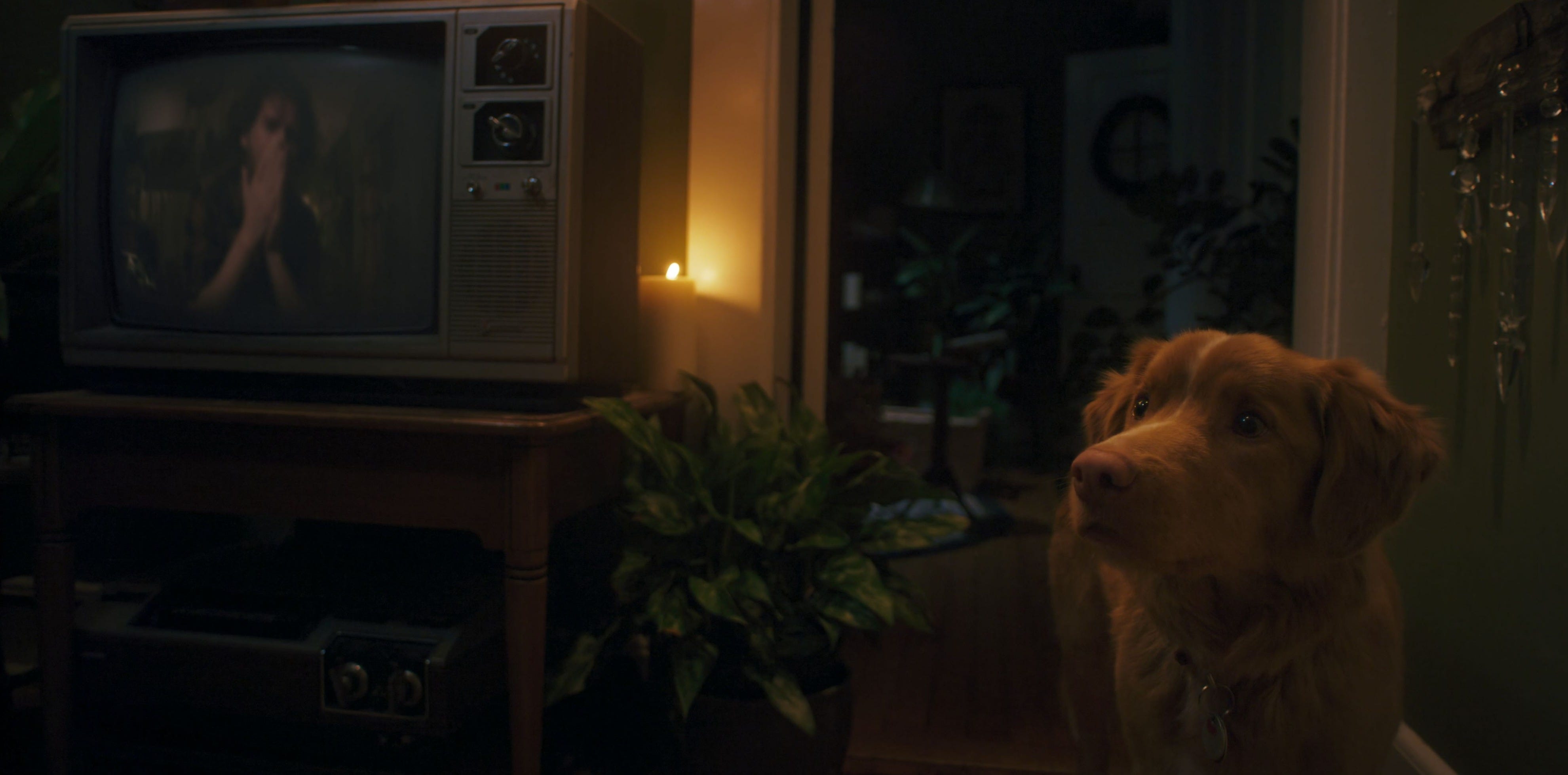
Painstakingly shot over three years in which a day’s worth of filming totalled only eight seconds of footage, the 73-minute feature is arguably one of horror’s most passionate projects to date. An exciting direction within a profoundly experimental and certainly still underappreciated genre of cinema, Leonberg utilises the ‘Kuleshov effect’, manipulating hours’ worth of footage of his dog Indy whining for treats, begging to play ball outside in excitement, or simply running over to find his owner hidden behind the corner to become moments of extreme fear and crisis, in which whines become screams. Make no mistake, this dog is no coward. Fiercely loyal, he embarks on a desperate journey to save his beloved owner from succumbing to the same erratic transformation his deceased grandfather underwent at the site of the family’s supposedly haunted home. The jumpscares are far and few, mostly relying on low-angle shots of Indy peering into dark corners, following the ghostly apparition of his predecessor, the not so lucky but also ever faithful golden retriever Bandit, whining and hiding from a malevolent force that permeates the house, seeking to isolate, possess and ultimately destroy Todd.
At the heart of Good Boy is not the supernatural, but a deeper story of intergenerational trauma; a literal inherited haunting symbolised by an isolated house in the woods. The horror genre has continuously proven itself to be the ideal medium for exploring grief, a realm in which we try to make sense of what pains and distresses us within the real world, our genuine fear of the unknowable depicted through spirits, curses, and hauntings. Within the world of the grotesque, possession acts as a coded metaphor for addiction and disease, this physical and mental metamorphosis as a twisted reflection of the very real ways our behaviours, personalities, and sense of self warp at their unforgiving clutches.
Following a recent trend we are witnessing within horror, Good Boy establishes itself as a key player in the lens of the unconventional narrator, in which the unfathomable is shown through the eyes of the vulnerable. As Zach Cregger’s Weapons (2025) was an allegory for addiction and its impact on a child, Leonberg’s film similarly weaves a tale of a transformation of a once loving protective figure into a cold, selfish abuser, all seen through childlike eyes of unwavering devotion and unable to be communicated in adult words (quite literally in Indy’s case). Leonberg takes the unnerving phenomenon, that moment when your dog appears as though it is watching someone who cannot be seen, a shadow hidden around the corner just out of your glimpse, and runs with it allowing for some truly beautiful sequences.
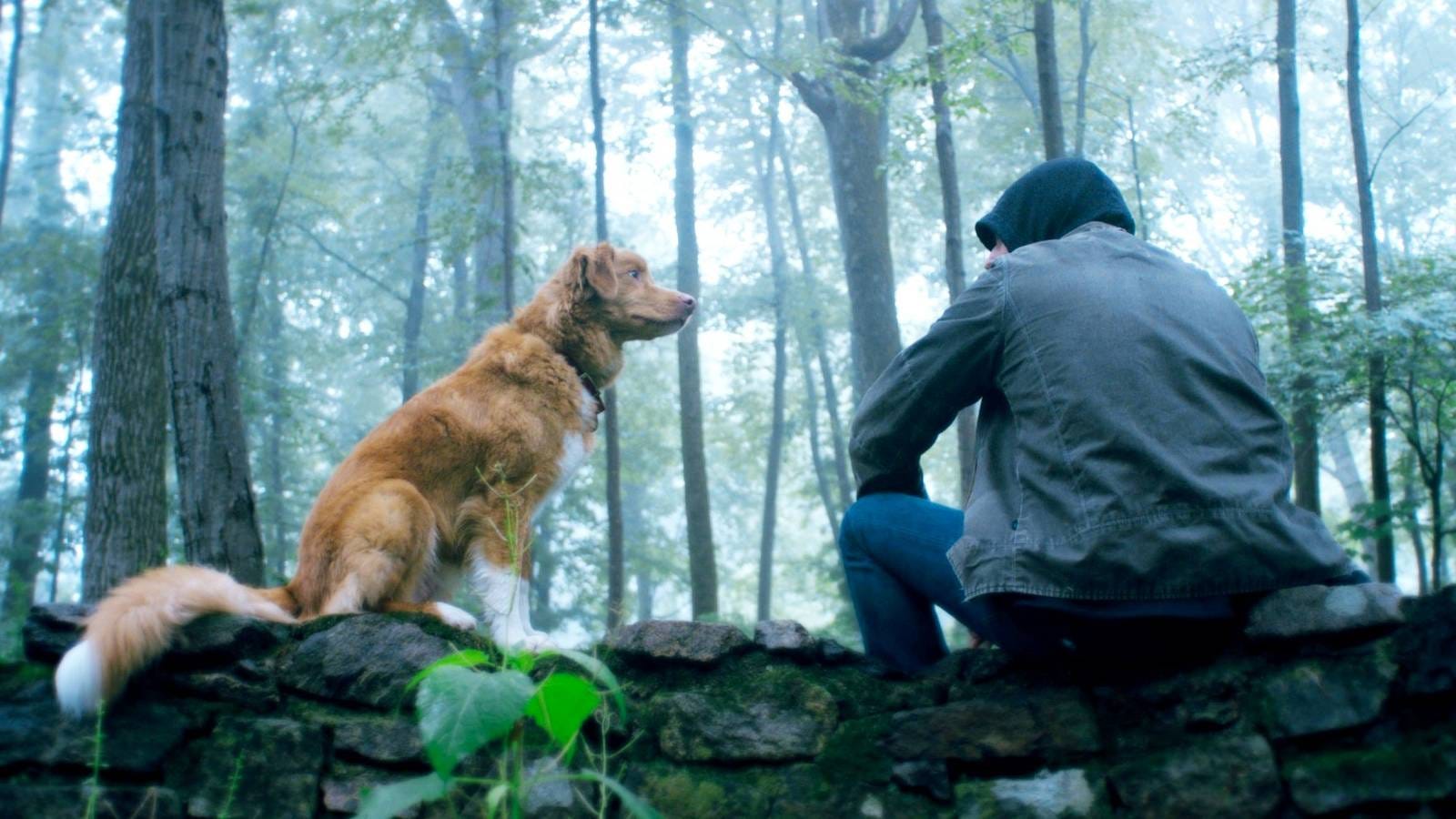
My personal highlight is a dream sequence portraying Indy’s nightmares where he pursues the ghostly apparition of Bandit through the darkest depths of the house. Dogs are powerful beings, possessing a powerful sense of smell up to 100,000 times more sensitive than our own and it is this acute sense of seeing and hearing something that is incomprehensible to us that enables a lurking sense of ambiguity to build. We are unsure if this unknown entity truly exists or is Indy’s manifestation of the unknown terminal ailment Todd is afflicted with.
Toeing a delicate balance between an impending sense of dread and a poignant portrayal of watching a loved one lose their mind, Leonberg creates a tragic, yet hopeful piece on grief. At the film’s crux Todd watches himself dead on the bed, dragged away by the evil force into the basement, separating him from his loyal companion. As his faithful friend chases him with a determination to rescue him from the creature’s grip.
Todd ultimately sets him free, reassuring him that he is “a good boy, but you cannot save me” and seals the message of the film, that mourning cannot consume us, we must choose life. Contrasting Todd’s previous deterioration into a man who selfishly abandons Indy outside in the cold rain, he ends his life in a moment of extreme selflessness by refusing to allow Indy to follow Bandit’s fate, trapped in the basement forever patiently waiting for his owner to return and in doing so breaks this familial cycle.
When Todd’s sister Vera opens the door to the basement and finds Indy at the bottom of the stairs, a crossroads moment is presented. Should Indy desert Todd, the man who still whistles for him, or leap into the light and start anew, finally put himself, a new opportunity for life first? In a redemptive, peaceful resolution, Leonberg inverts the horror genre in creating something that is truly emotionally beautiful. An ending we may never truly know but should not care to.
What is more important is this loving reflection of a relationship where death cannot be communicated to one another; man and dog, who will never truly understand each other’s thoughts but have an unbreakable bond. The final shot of Indy escaping, running up towards the light, encapsulates that Good Boy is more than just your average ghost story, a lesson where although loss is inevitable we cannot let ourselves be drowned in its wake.
 | A guest post by
|