

Beneath the Same Sky: Examining the father-daughter relationship in Aftersun
Aftersun recognises that the parent-child dynamic is one where in the absence of an emotionally mature parent, the child is often the one to grow up faster and act in a role to placate their parents.

The relationships we have with family members can be complex, nuanced and difficult to define. How can you make a film which feels universal to the specific relationship, without relying upon tropes? Films like Lady Bird (2017), Everything Everywhere All At Once (2022) and Turning Red (2022) have been able to explore the mother-daughter relationship with honesty and vulnerability; depicting this universal experience whilst being relatable. But what about the father-daughter relationship? In many shows and films I loved growing up, you would often have the defiant rebellious teenage daughter who went from the apple of her father’s eye to his foe or was neglected in favour of her brother. I struggle to list names of films depicting this relationship, but one stands out for me, Aftersun (2022). Charlotte Wells’ stunning directorial debut captured for me and many others that experience rarely depicted on screen.
Sophie (Frankie Corio) and Calum (Paul Mescal) feel like a typical father and daughter when we meet them, they’re playful and warm and they tease and bicker in a familiar fashion only possible, between two people who really know each other. The relationship feels easy. But as the film progresses, this warmth is plagued with shadows. When Sophie loses her expensive scuba diving mask, Calum is clearly upset with her and fakes a nonchalant attitude eager to ensure the holiday goes well. But Sophie is mature beyond her years and picks up on this and comforts him. It is a small scene, but it sets up the pattern of their relationship. Sophie has learned at a young age to be emotionally aware to the point of knowing when and how to steady her father and Calum has veered to the extreme opposite, feeling as if he needs to tuck his worst feelings away from her.
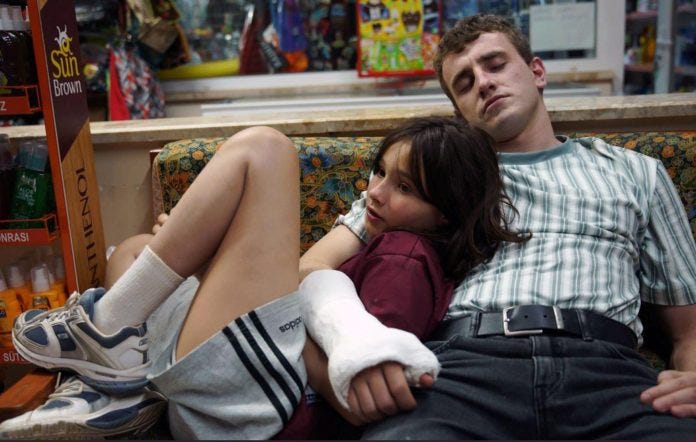
Aftersun recognises that the parent-child dynamic is one where in the absence of an emotionally mature parent, the child is often the one to grow up faster and act in a role to placate their parents. Part of this dynamic is shaped by Calum’s age, adding to the emotionally absent role he plays in Sophie’s life. As a stranger assumes he is her brother, Calum remarks “I’m her dad, actually” with a twinge of resentment. Calum is nearly thirty and has an eleven-year old daughter. I am twenty-four and the concept of having a five-year old child is scary to me. At that age, I felt unable to take care of myself and was growing up. Calum’s age is not an excuse for his lack of emotional availability to Sophie, but this moment highlights the complicated feelings he has about being a young father and what that meant for his life. For Sophie, it’s a reminder that their relationship is heavier and has a different meaning to a typical father-daughter relationship. Calum loves Sophie clearly, but having her young brings up the fact that he has missed out on his youth.
This dynamic is clearly gendered. If the film focused on Calum and his son, the expectations for the child would be different. The son would be allowed to be carefree or rebellious and any misbehaviour would be laid at Calum’s feet. As a daughter, Sophie takes on the emotional labour of their relationship and internalises his depressive moods. Calum does not demand this, if anything, he tries with great efforts to hide his depression from her. He breaks down when she is nowhere near him. For Calum, his depression is something to be shouldered alone. But girls are raised and socialised to be perceptive, to be able to notice, soothe and care for others. If it’s not parents, see many TV shows and films. If it’s not the media, it’s in schools where girls are often used to placate disruptive boys.
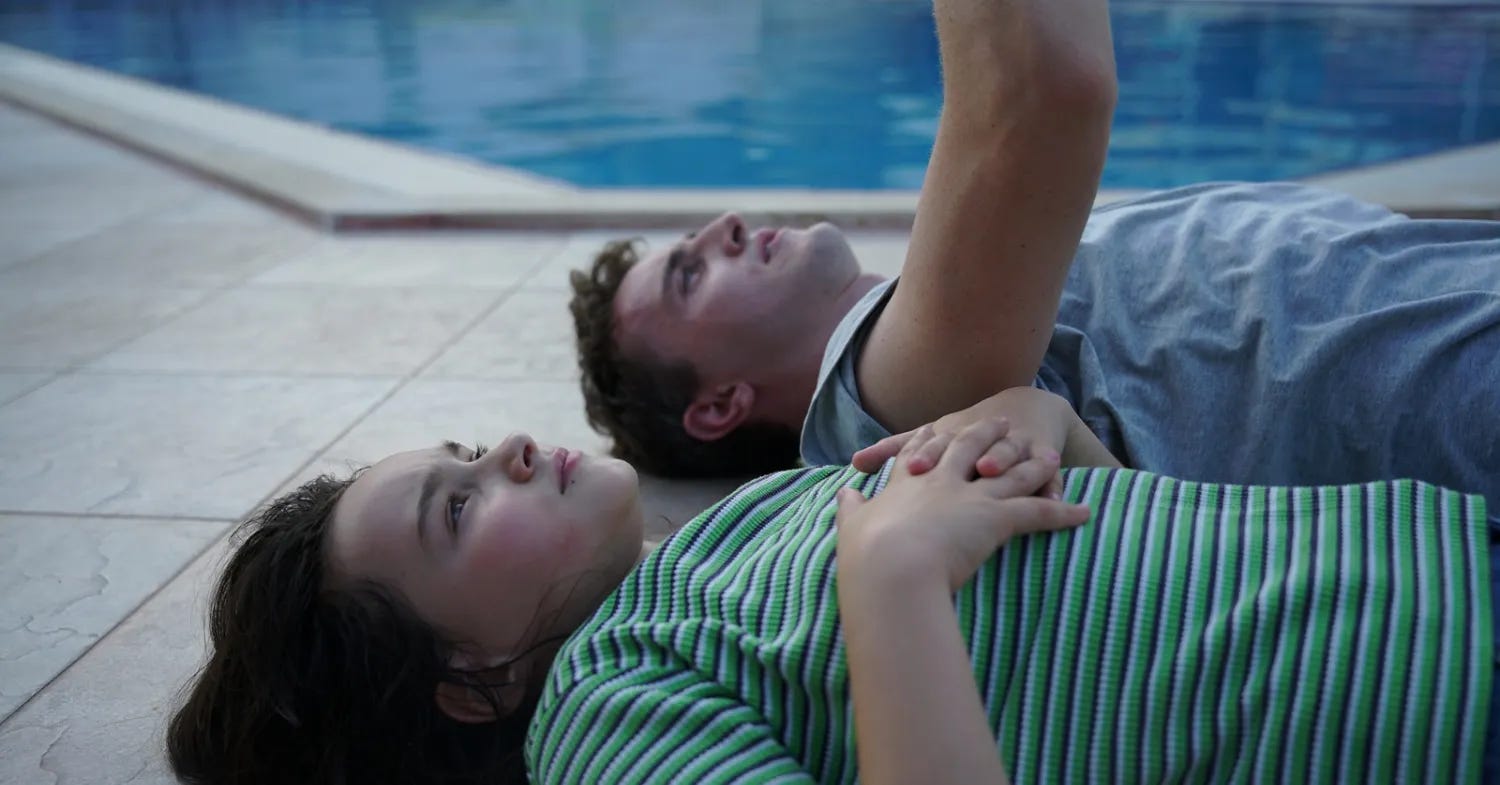
Aftersun is a remarkable film, because the father-daughter relationship is not reduced to either sentimentality or conflict. Its depiction of the father-daughter relationship is more than that. How formative it is for the daughter with Sophie as a child already bearing more than she should and how complicated it can be for the father with Calum being simultaneously deeply present on the holiday, but also absent. Love is full of contradictory truths and Wells’ recognises this. Where there is tension between the two and sorrowful moments, I also see the brightness of their relationship where they’re dancing to Under Pressure and joking with each other. Those final stills where Sophie is waving to her father with her face half-blurry stand out to me. There is no resolution or neat explanation for what became of their relationship, we sit with it and we accept incompleteness as the honest residue of love.
 | A guest post by
|